

How to Wash Graphic Tees to Last
Table of Contents
- How to Wash Graphic Tees to Last: The Fundamentals
- Step 1: Prepare Your Graphic Tee Before Washing
- Step 2: Choose the Best Detergent for Graphic Tees
- Step 3: Wash with Cold Water and Delicate Cycle
- Air Drying vs. Machine Drying Graphic Tees
- How to Fix Cracked Graphic on Shirt
- Stain Removal Without Damaging Prints
- Frequently Asked Questions
Last Updated: September 27, 2026
How to Wash Graphic Tees to Last: The Fundamentals
Washing graphic tees the right way isn't complicated, but it's not obvious either. Most people toss their favorite graphic tee in the machine with regular clothes, use hot water, and wonder why the print cracks or fades within a few months.
The method you use determines whether your graphic tee looks fresh for years or falls apart in a season. The difference comes down to understanding what damages prints and taking simple steps to protect them.
Why washing method matters for graphic prints
Graphic prints aren't woven into the fabric like a solid-colored tee. They sit on top of the garment, bonded through heat and pressure. Heat, friction, harsh chemicals, and aggressive agitation all work against that bond. When you wash carelessly, you're essentially fighting against the print's longevity.
Different print types require different care levels. Direct-to-garment (DTG) prints (like those on InkDustry Designs graphic tees) sit closer to the fabric surface and require gentler handling.

Understanding your print type
DTG prints (like those on InkDustry Designs graphic tees) sit closer to the fabric surface and require gentler handling.
Check your shirt's tag or ask the seller if you're unsure. Knowing your print type takes the guesswork out of care.
Step 1: Prepare Your Graphic Tee Before Washing
Preparation is where most people skip steps. Spending 30 seconds getting this right prevents most damage.
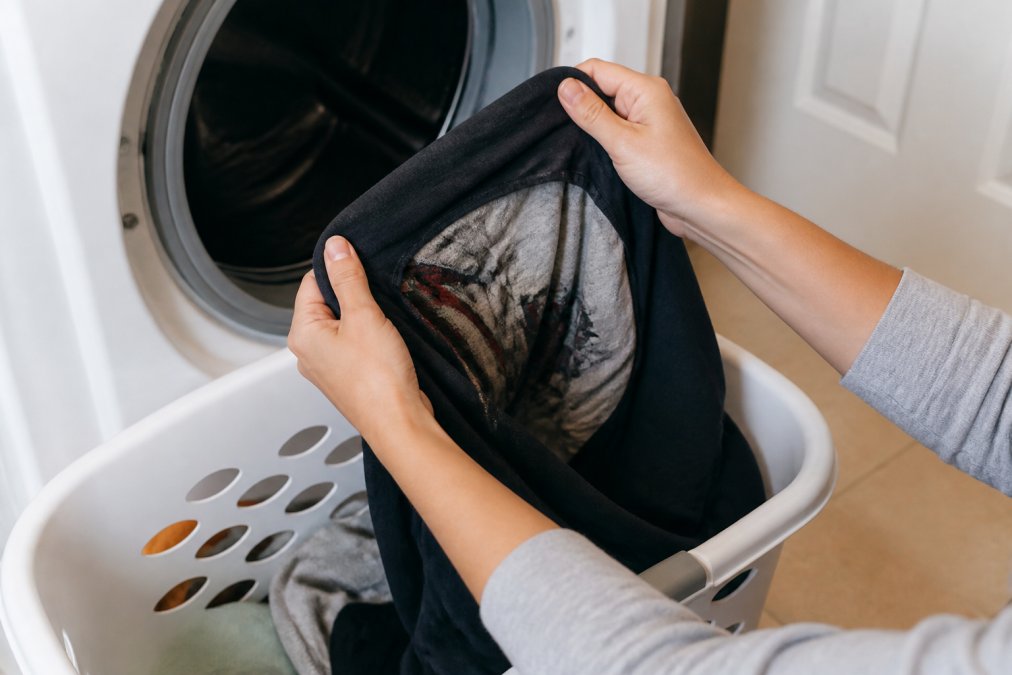
Turn shirts inside out
This is the single most effective thing you can do. When the printed side faces inward, it's protected from direct friction against the washing machine drum and other garments. The back of the fabric absorbs the agitation instead of the print.
Always turn graphic tees inside out before washing. No exceptions.

Sort by color to prevent bleeding
Wash graphic tees separately from other clothes when possible. New or darker prints can bleed color into lighter garments. Even if the print doesn't bleed, lighter clothes can pick up dye from the fabric itself.
If you must wash together, group by color:
- Darks with darks
- Lights with lights
- Whites alone if the tee is brand new
Step 2: Choose the Best Detergent for Graphic Tees
The detergent you choose matters more than most people realize. Wrong choice and you're essentially using a mild solvent that breaks down the print's bond to the fabric.
Gentle detergents vs. harsh chemicals
Use a mild, gentle detergent designed for delicate fabrics. Look for products labeled "gentle" or "delicate." Avoid anything with bleach, optical brighteners, or heavy perfumes.
Harsh detergents contain surfactants and enzymes that are too aggressive for graphic prints. They work great on stubborn stains but damage the print's integrity over time. The trade-off isn't worth it.
Gentle detergents clean effectively without the aggressive action. They're specifically formulated to protect delicate fibers and bonded elements like prints.
Avoiding bleach and additives
Never use bleach on graphic tees. Bleach breaks down both the fabric and the print's adhesive. It also causes discoloration even on dark prints.

Skip fabric softeners too. They coat the fibers and can interfere with the print's bond. Avoid scent boosters and other laundry additives. Stick to plain, gentle detergent and nothing else.
Step 3: Wash with Cold Water and Delicate Cycle
Water temperature and cycle selection directly affect print longevity. This is where science meets practicality.
Why cold water protects your prints
Heat weakens the adhesive that bonds the print to the fabric. Hot water speeds up this degradation. Cold water minimizes this risk entirely.
Cold water also prevents shrinkage, which can stress the print and cause cracking. It's gentler on the fabric fibers themselves, meaning less overall wear.
Use cold water every time. There's no scenario where hot water benefits a graphic tee.
Gentle cycle settings and agitation concerns
The delicate or gentle cycle uses slower agitation and shorter spin times. This reduces friction between your tee and the drum, protecting the print surface.
Regular or heavy cycles are too aggressive. They create the exact conditions that damage prints:
- High-speed agitation
- Extended wash times
- Forceful spinning
Set your machine to delicate or gentle. If your machine has a hand-wash setting, that's even better. Longer wash times at lower agitation are safer than short, intense cycles.
Air Drying vs. Machine Drying Graphic Tees
This decision has a bigger impact than most people expect. The dryer is where many prints fail.
Why air drying extends garment life
Heat from the dryer accelerates print degradation. It also causes shrinkage, which stresses the print's bond to the fabric. Air drying avoids both problems entirely.
Hang your graphic tee in a well-ventilated area, away from direct sunlight. Sunlight can fade prints over time, especially lighter-colored designs.
Air drying takes longer but extends the life of your tee by months or even years. It's the single best choice for print longevity.
Tumble drying risks and low-heat alternatives
If you must use a dryer, use the lowest heat setting available. Low heat is still risky but far safer than medium or high heat.
Never use high heat. You're essentially baking the print, accelerating the breakdown of its adhesive. Medium heat isn't much better.
The best approach: air dry whenever possible. If time is tight, use low heat for 10-15 minutes to remove excess moisture, then hang the rest of the way. This hybrid method gives you speed without excessive heat damage.
How to Fix Cracked Graphic on Shirt
Damage happens despite best efforts. Understanding what's repairable, what's permanent, and how to extend a tee's life after cracks appear helps you maximize your wardrobe investment.
Identifying damage early and its progression
Small cracks at the edges of the print are the first sign of aging. These often appear in high-stress areas like the shoulders, underarms, or where the print stretches across the chest. Light fading is normal and doesn't affect wearability. Cracks, peeling, or flaking indicate the print's bond is compromised.
DTG prints fade gradually and may show small areas of ink loss. Each type degrades differently, but all follow a predictable progression: minor cracks → spreading cracks → peeling → significant loss of design.
Catch damage early. A tee with minor cracks can still be worn for several more months if you adjust your care routine, but it will continue degrading with each wash.
Realistic repair options for different damage types
Fading without cracks (DTG prints): Fading cannot be reversed. If a DTG print has faded significantly but has no cracks or peeling, the tee is still wearable but approaching the end of its aesthetic life. No repair is possible. Prevent further fading by storing the tee away from direct sunlight and continuing gentle washing practices.
When to retire a tee
If the print covers more than 15-20% of the shirt and shows significant cracking, peeling, or loss of design, it's time to retire the tee from regular wear. Wearing a heavily damaged graphic tee looks worse than not wearing it at all. However, retiring doesn't mean discarding:
- Sleep shirt or lounge wear: A tee with a damaged print is still comfortable for sleeping or relaxing at home.
- Workout or yard work shirt: If the damage is cosmetic only (fading, minor cracks), the tee is still functional for activities where appearance matters less.
- Donation or textile recycling: Many textile recycling programs accept damaged clothing. Check local programs in your area.
Extending life after cracks appear
Once cracks are visible, switch to the most conservative washing practices:
- Wash every 2-3 wears instead of after every wear (if the tee isn't visibly soiled).
- Use the hand-wash cycle if your machine has one, or wash by hand in cold water with gentle detergent.
- Skip the dryer entirely, air dry only.
- Avoid any stain treatment or pre-soaking on or near the print.
- Store flat rather than hanging to reduce stress on the print.
These adjustments can extend a cracked tee's wearable life by 3-6 months, turning a tee that might have been retired into one that continues to be worn and enjoyed.
Stain Removal Without Damaging Prints
Stains happen. The challenge is removing them without harming the print in the process.
Pre-soaking and spot treatment methods
Act fast. Fresh stains are easier to remove than set-in stains. Blot (don't rub) the stain with a clean cloth to remove excess liquid.
For oil-based stains, sprinkle baking soda on the area and let it sit for 15 minutes.
Frequently Asked Questions
How do I wash graphic tees without the print fading?
Turn your tee inside out, wash in cold water on a delicate cycle with mild detergent, and air dry completely. Cold water prevents dye bleeding and heat damage. Avoid hot water, bleach, and fabric softeners, which accelerate fading. Washing separately from dark colors also reduces color transfer. Most graphic tees maintain vibrant prints for 50+ washes when handled this way.
What's the best detergent for graphic tees?
Use a mild, gentle detergent free of bleach, optical brighteners, and harsh chemicals. Liquid detergents work better than powders for graphic prints because they dissolve completely and leave less residue on fabric. Avoid products labeled 'heavy-duty' or 'stain-fighting,' which contain stronger surfactants that can break down print adhesion and damage fiber integrity over time.
Should I air dry or machine dry my graphic tees?
Air drying is always better for graphic tees. Heat from tumble dryers causes print cracking, peeling, and shrinkage. Hang your tee on a clothesline or lay it flat to dry indoors. If you must use a dryer, use the lowest heat setting and remove the tee while slightly damp. Air drying extends the life of both the garment and the print by preventing heat damage to synthetic fibers in the design.
Can I fix a cracked graphic on my shirt?
Minor cracks can sometimes be slowed by careful washing, but they cannot be fully repaired. Once DTG ink cracks, the damage is permanent. Prevent cracking by air drying, avoiding high heat, and using the delicate cycle. If your graphic is severely cracked or peeling, the tee has reached the end of its wearable life. Proper care from the start prevents this damage.