

How to Identify High Quality Hoodie Fabric
Table of Contents
- What Makes High Quality Hoodie Fabric Stand Out
- Cotton vs Polyester Hoodie Blend: Finding the Right Balance
- How to Check Fabric GSM for Hoodies
- The Tactile Test: What Your Hands Tell You
- Signs of Poor Quality Hoodie Fabric to Avoid
- Stitching Quality and Seam Integrity Matter
- Durability Tests You Can Do Right Now
- Frequently Asked Questions
Last Updated: September 23, 2026
What Makes High Quality Hoodie Fabric Stand Out
High quality hoodie fabric combines natural and synthetic fibers in the right proportions, with careful construction that resists pilling and maintains softness through repeated wear. The difference between a hoodie that lasts two seasons and one that falls apart in six months comes down to a few specific fabric characteristics you can actually test yourself.
The best hoodies feel different the moment you touch them: they don't pill after a few washes, the seams don't separate, and the fabric breathes without feeling thin or cheap.
Cotton vs Polyester Hoodie Blend: Finding the Right Balance
Most quality hoodies use a cotton-polyester blend rather than pure cotton or pure polyester.
Pure cotton feels soft and breathes well but shrinks unpredictably and pills easily. Pure polyester resists wrinkles and dries fast but can feel plasticky and trap moisture. Cotton-polyester blends (50/50 or 80/20) offer the best balance: cotton provides breathability and softness while polyester adds durability and pilling resistance.
InkDustry Designs offers both blends: the Millennials hoodie (50/50 cotton-polyester) for balanced casual and active wear, and the Cotton Heritage Titans (80/20 cotton-polyester) for those prioritizing softness.

How to Verify Fibre Blend Claims
Check the label for the cotton-polyester ratio. Avoid hoodies that don't list fibre composition.
Read the fibre content label carefully. Percentages should add up to 100%. Vague categories like "other" signal inconsistent or lower-quality sourcing.
Look for certification marks:
- GOTS (Global Organic Textile Standard) verifies organic cotton and responsible supply chain practices.
- OEKO-TEX Standard 100 tests for harmful chemicals and manufacturing safety.
- Fair Trade Certified verifies fair wages and safe working conditions.
Check supply chain transparency. Quality manufacturers disclose where cotton is grown and fabric is woven. Vague sourcing ("sourced globally") suggests the manufacturer lacks control; specific sourcing indicates quality confidence.
Fibre Blend Performance Trade-offs
80/20 cotton-polyester: Softest feel, best breathability, 3-5% shrinkage risk, 2-3 year lifespan. 50/50 cotton-polyester: Balanced softness and durability, under 2% shrinkage, 3-4 year lifespan. 30/70 cotton-polyester: Excellent durability, minimal shrinkage, 4+ year lifespan, best for active wear.
How to Check Fabric GSM for Hoodies
Fabric weight, measured in GSM (grams per square meter), indicates density and durability. Heavier fabric means better durability and warmth; lighter fabric feels airier but may not last as long.
Understanding Fabric Weight Standards
Light (under 240 g/m²): Thin, breathable, best for layering. Medium (240-280 g/m²): Sweet spot for most hoodies, balances comfort and durability. Heavy (280+ g/m²): Thick, warm, durable, best for cold weather.
InkDustry Designs hoodies sit in the medium range: the Millennials hoodie at 8.0 oz/yd² (271 g/m²) and the Cotton Heritage Titans at 8.5 oz/yd² (280 g/m²).

To check GSM yourself, look at the product label or specification sheet. If a hoodie doesn't list fabric weight, that's a red flag.
The Tactile Test: What Your Hands Tell You
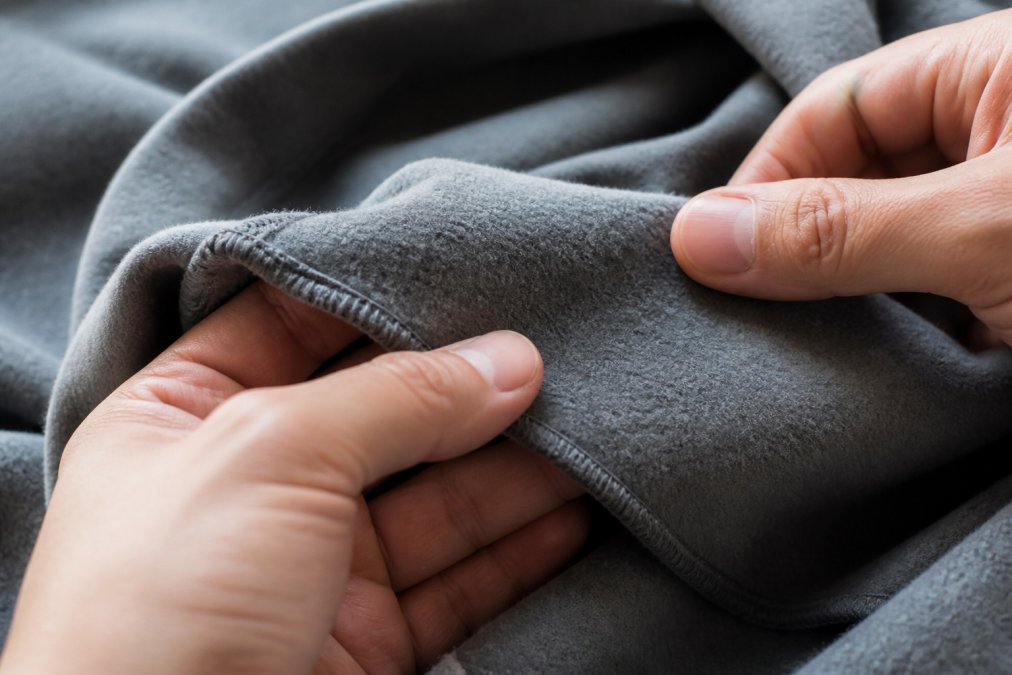
Run your fingers across the surface, quality fabric feels smooth and even. Press your thumb into the fabric, quality hoodies bounce back immediately. Rub the fabric between your fingers, quality hoodies resist pilling even under friction. Feel the inside seams, they should feel smooth, not rough. Pick up the hoodie, it should feel substantial, not thin or papery.
Fleece vs French Terry Construction
These two interior constructions create very different feels and performance profiles.
Fleece has a brushed interior, traps air for warmth, but pills more easily. Best for cold weather. French terry has loops, is more durable, resists pilling better, and works well for active use.
The Cotton Heritage Titans uses a jersey-lined hood with fleece construction, combining durability with comfort. The Millennials hoodie features a double-lined hood with matching drawcord, optimizing for comfort and fit.
Feel the interior. Fleece should feel uniformly soft. French terry should have visible loops that feel consistent. Either way, the interior construction should be even across the entire garment, no thin spots or rough areas.
Signs of Poor Quality Hoodie Fabric to Avoid
Poor quality hoodies show themselves quickly if you know what to look for. These are the red flags that predict a hoodie won't last.
Pilling after minimal wear. Run your fingers across the fabric. If you see little fiber balls forming, the fabric quality is compromised. This happens when short fibers break free from the yarn. Quality hoodies have strong yarns that resist this.
Uneven color or texture. Quality hoodies look consistent across the entire garment. Variations in color or texture suggest inconsistent manufacturing. This often correlates with other durability issues.
Thin, papery fabric. A hoodie that feels insubstantial in your hands probably won't last. Quality hoodies have enough weight and density to feel premium.
Rough or scratchy seams. Run your finger along the seams. They should be smooth. Rough seams indicate poor stitching or low-quality thread. Rough seams also cause discomfort and wear out faster.
Loose or fraying stitching. Look closely at the seams. The stitches should be tight and even. Loose or uneven stitching means the seams will separate with wear.
Incomplete fiber information on the label. Quality manufacturers list the exact fiber blend and fabric weight. If the label is vague or missing this information, the manufacturer is hiding something.
Visible shrinkage in the package. Some hoodies arrive noticeably smaller than the size guide suggests. This indicates the fabric wasn't properly pre-shrunk. You'll see more shrinkage after the first wash.
Stitching Quality and Seam Integrity Matter
The best fabric in the world falls apart if the stitching is poor. Seam integrity is where many cheap hoodies fail.
Look at the seams. Quality hoodies use double-needle stitching on critical seams like shoulders, armholes, and the hem. This creates two parallel lines of stitching instead of one. Double-needle stitching distributes stress across more thread, making seams last longer.
Run your finger along the seams. They should be smooth, straight, and consistent. Wobbly stitching indicates rushed manufacturing. Loose stitching means the seams will separate with wear.
Check the neck. Quality hoodies use twill neck tape, a reinforced binding that prevents the neck from stretching out. This is a small detail that makes a huge difference in how long the hoodie stays wearable.
Look at the cuffs and waistband. These areas take constant stress from pulling the hoodie on and off. Quality hoodies use 1×1 ribbing with spandex for stretch and recovery. This keeps the cuffs and waistband from sagging or losing their shape.
The Cotton Heritage Titans uses split stitch double-needle sewing on all seams with twill neck tape, exactly what you want to see. The Millennials hoodie features double-needle stitching on collar, shoulders, armholes, cuffs, and hem, plus 1×1 athletic rib-knit cuffs and waistband with spandex.
These construction details aren't just specifications. They directly predict how long the hoodie will stay comfortable and wearable.
Durability Tests You Can Do Right Now
You don't need a lab to test fabric durability. These checks reveal how well a hoodie will hold up, both immediately and after repeated washing, which is where most hoodies fail.
Pre-Purchase Tactile and Visual Tests
The pilling test. Use a fine-toothed comb or your fingernail. Rub it gently across the fabric surface in one direction. Quality hoodies show minimal pilling. Cheap hoodies generate visible fiber balls immediately.
The stretch test. Gently pull the fabric in different directions. Quality fabric recovers immediately when you release it. Fabric that stays stretched indicates weak fibers or poor construction. Test the cuffs and waistband especially, these areas need strong elasticity.
The seam stress test. Gently pull on a seam. It shouldn't separate or tear. The thread should hold firm. If the seam gives way easily, it will definitely fail in normal wear.
The color-fastness test. Rub a damp white cloth across the fabric. If significant color transfers to the cloth, the dye isn't bonded well. This hoodie will bleed color in the wash and fade quickly.
The weight consistency test. Feel different areas of the hoodie. The fabric weight should be consistent across the entire garment. Thin spots indicate manufacturing defects and predict premature failure in those areas.
The interior durability test. Check the inside seams and construction. The interior should be as well-made as the exterior. Loose or rough interior stitching will degrade faster and cause discomfort.
The Wash-Test Protocol: Predicting Real-World Performance
These tactile tests predict initial quality, but the real test is how the hoodie behaves through washing.
Shrinkage prediction. Measure the hoodie's length, width, and sleeve length before the first wash. Wash it in warm water (40°C) with similar colours, using standard detergent. Dry it on medium heat or air-dry. Measure again.
Cotton-heavy blends (80% cotton or higher) will shrink more than balanced blends (50/50).
Reading the Label for Durability Clues
The care label and fibre content label contain clues about expected durability:
- Pre-shrunk notation.
- Fibre blend stability. A clearly printed fibre blend (e.g., "80% cotton, 20% polyester") suggests the manufacturer is confident in the fabric. Vague labels like "cotton blend" or missing percentages often hide lower-quality or inconsistent fibre sourcing.
- Wash temperature guidance.
Frequently Asked Questions
Is 50% cotton 50% polyester good for hoodies?
A 50/50 cotton-polyester blend strikes a practical balance. Cotton provides softness and breathability, while polyester adds durability and reduces shrinkage. This blend resists pilling better than pure cotton and costs less than high-cotton options. The trade-off: pure cotton feels softer initially, but a quality 50/50 blend holds up better through multiple washes. Check the fabric weight (aim for 250-280 g/m² or 8-9 oz/yd²) to ensure the blend feels substantial.
Does fabric weight matter when choosing a hoodie?
Fabric weight (measured in GSM or grams per square meter) directly affects durability, warmth, and longevity. Lightweight hoodies (under 200 g/m²) feel airy but wear thin quickly. Medium-weight (240-280 g/m²) offers the sweet spot for everyday wear and comfort. Heavier hoodies (300+ g/m²) provide maximum durability and warmth but can feel stiff. High-quality hoodies typically sit between 250-290 g/m², balancing comfort with longevity.
How does fabric composition affect hoodie durability?
Fiber type determines how well a hoodie withstands washing, wear, and time. Pure cotton softens with age but shrinks and pills more easily. Polyester resists shrinkage and pilling but can feel plasticky and trap moisture. Blends (like 80% cotton, 20% polyester) combine the best traits: cotton's comfort with polyester's durability.
What is the highest quality fabric for hoodies?
High-quality hoodie fabric combines cotton with a polyester blend (typically 80/20 or 70/30), weighs 250-290 g/m², and features tight stitch density. A blend prevents excessive shrinkage while maintaining breathability. Look for split-stitch double-needle seams and a brushed or loop-back interior for comfort.